 Brest Hub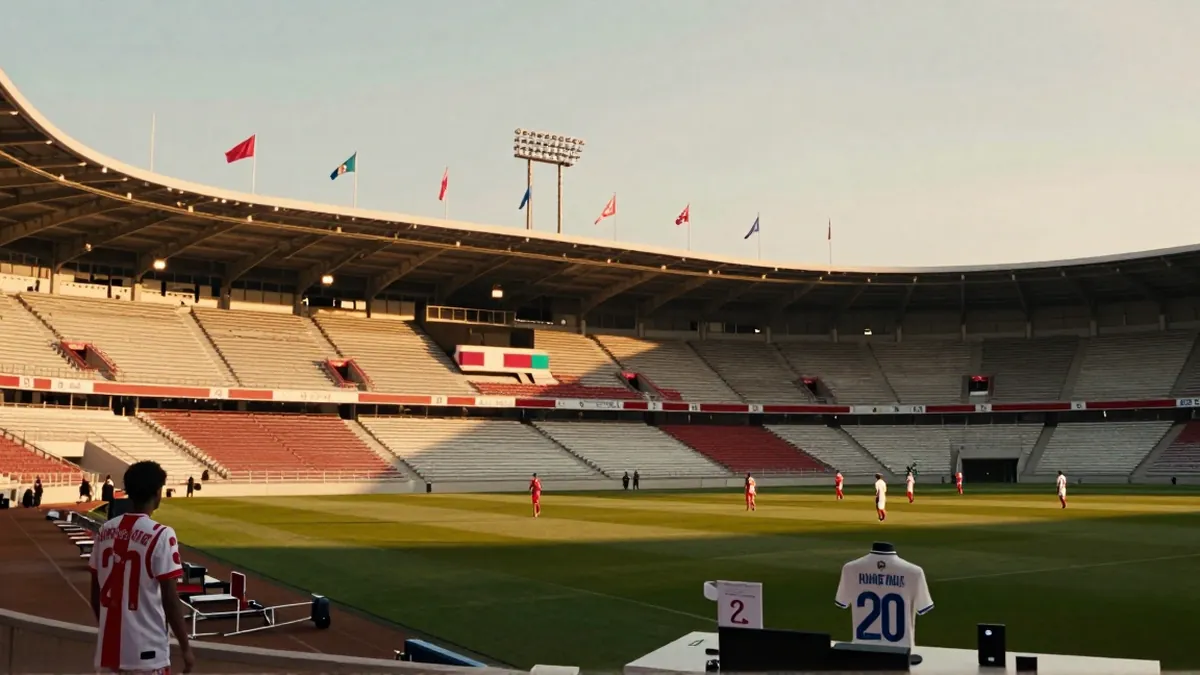
Brest marks the 90th anniversary of Menez‑Paul stadium, a cornerstone of the club’s story since its opening on 11 November 1933. The venue, originally with 2 000 seats, saw the evolution from AS Brestoise to today’s Stade Brestois 29, eventually hosting over 15 000 fans at its peak.
How did the stadium originate?
In 1932, the Sports Park Real Estate Company was set up to replace the cramped Prat‑ar‑Raty ground, which was costly and limited to a single pitch. Architect Édouard Mocaër’s plans led to construction starting in March 1933. Two months later, Menez‑Paul stadium opened with two fields — one for training, one for official matches — and a stylish entrance with four ticket windows.
Why was the stadium pivotal in the 1960s?
The club’s second golden era in the 1960s spurred capacity expansion to 8 000‑15 000 spectators. A natural earthbank was roofed, kiosks sprouted around the perimeter, and the venue hosted memorable derbies, such as the rain‑soaked 6 December 1959 clash where 11 000 fans watched Stade Brestois win 3‑2.
What hardships did the stadium endure?
During World War II, the Kriegsmarine used the site for troop conditioning. Three American bombs damaged the structure, yet club volunteers repaired it. Financial woes in the 1980s led to municipal ownership in 1982 and partial demolition of the stands in 1986, replaced by locker rooms and a modest metal terrace.
How does the stadium stand today, between legacy and renewal?
A 2023 refurbishment gave the stadium a fresh lease on life, preserving its historic role while meeting modern standards. Despite these upgrades, the team battles in Ligue 1: it sits 12th with 39 points, 10 wins, 9 draws and 15 losses from 34 games, currently on a DLLLD run. Brest has scored 43 goals and conceded 55, a –12 goal difference, and trails league leaders Paris Saint‑Germain by 37 points.
What does this heritage mean for fans?
Menez‑Paul stadium remains the beating heart of Brest, echoing past glories and present challenges. Loyal supporters, attached for over a century, view each renovation as a promise that the club can climb back to the summit while honoring the memories etched in the stadium’s stone and grass.